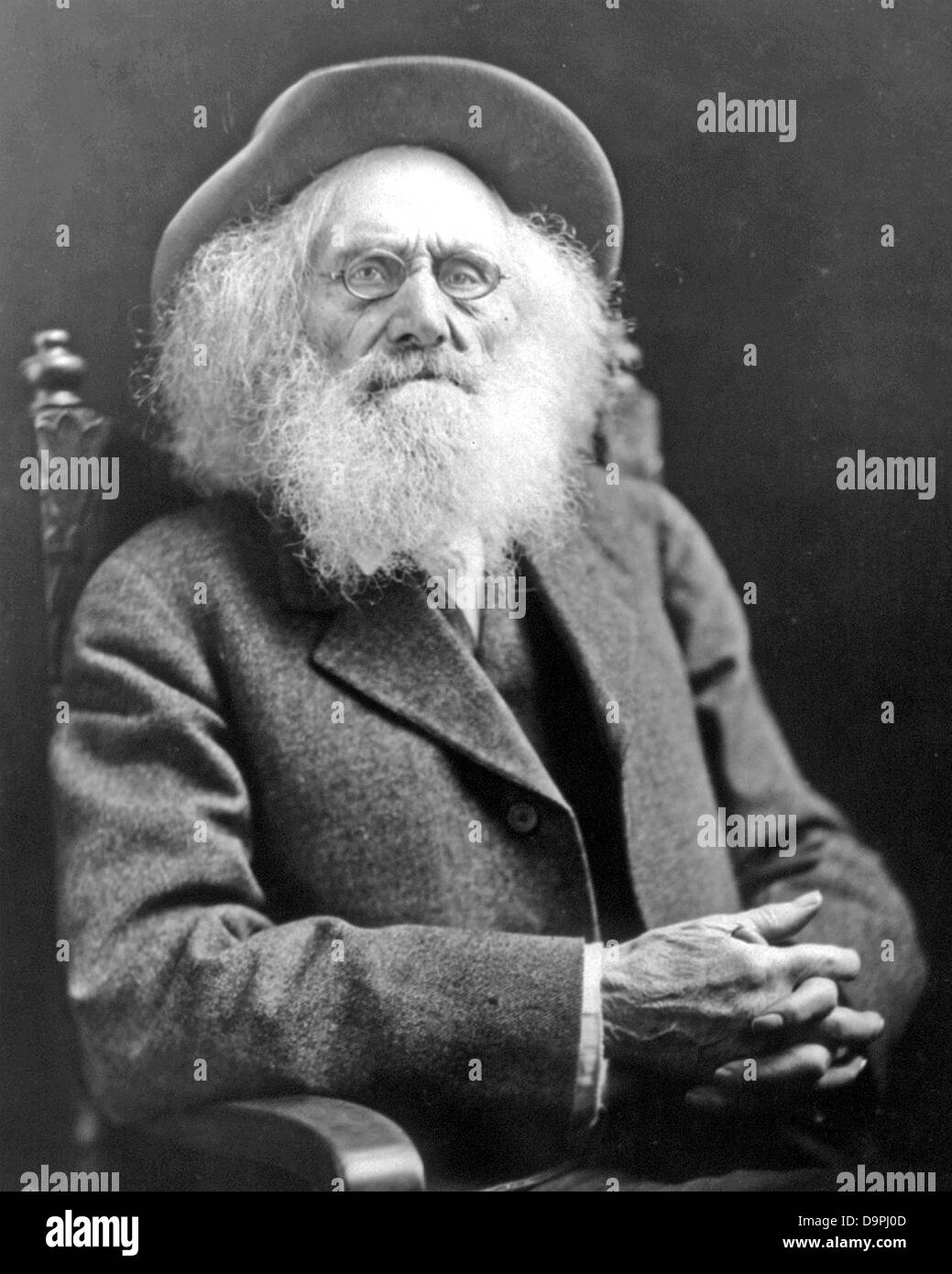
The Indomitable Spirit of Ezra Meeker: From Ox-Cart to Airplane, a Century of Western Grit
Imagine a man, nearing his 76th birthday, hitching a team of oxen to a covered wagon and embarking on a journey that, for most, was a distant memory or a faded legend. This was Ezra Meeker in 1906, a man whose life spanned the vast chasm between the rugged frontier and the dawn of the modern age. More than just a pioneer, Meeker became the living embodiment of the Oregon Trail, dedicating his twilight years to ensuring its epic story was not lost to the relentless march of progress. His tale is one of relentless vision, adaptability, and an unshakeable determination to bridge the past with the present, making him one of America’s most unique and enduring historical figures.
Born in Ohio in 1830, Ezra Meeker’s early life was steeped in the agrarian traditions of the burgeoning American republic. But a restless spirit, a common trait among those who would define the American West, stirred within him. The promise of fertile lands, new beginnings, and the sheer adventure of it all called to him. In 1852, at the age of 22, Meeker answered that call. With his young wife, Eliza Jane, and their infant son, he set out on the Oregon Trail, a perilous odyssey that would forever shape his understanding of America’s westward expansion.
Their journey was no romanticized picnic. It was a brutal test of endurance, courage, and resourcefulness. Thousands of miles stretched before them, across vast plains, towering mountains, and unforgiving deserts. They faced disease, starvation, the constant threat of Native American encounters, and the sheer physical exhaustion of pushing a covered wagon, laden with all their worldly possessions, through an untamed wilderness. Meeker himself later recounted the grim realities, noting the countless graves that dotted the trail, silent markers of shattered dreams and lives cut short. This firsthand experience, etched into his memory, would become the wellspring of his later mission.

Upon arriving in the Pacific Northwest, Meeker and his family initially settled in Oregon, but soon moved north to the Washington Territory, eventually establishing a homestead in the fertile Puyallup Valley. Here, Meeker’s industrious nature truly flourished. He became a successful farmer, pioneering the cultivation of hops, a key ingredient in beer, and earning the moniker "Hops King of the World" for a time. He was an innovator, a shrewd businessman, and a community builder, instrumental in establishing Puyallup as a thriving agricultural hub. He served as a postmaster, a county commissioner, and even made an unsuccessful bid for Congress, demonstrating a deep engagement with the civic life of his adopted home.
Yet, as the decades passed, Meeker witnessed a profound transformation. The very trails he had traversed with such hardship were vanishing. Fences crisscrossed the plains, towns and farms replaced vast open spaces, and the younger generations, born into a more settled world, knew little of the epic sacrifices that had forged their nation. The ruts of the pioneer wagons, once deep and undeniable, were being plowed over, forgotten. This erosion of memory deeply troubled Meeker. He foresaw a future where the defining saga of American expansion would become a mere footnote, devoid of its human drama and profound significance.
It was this fear of oblivion that spurred Meeker, in 1906, to embark on his most famous endeavor. At 75, a time when most men of his generation had long since retired to their rocking chairs, Meeker resolved to retrace the entire Oregon Trail from Puyallup, Washington, to Omaha, Nebraska. His goal was not personal glory, but preservation. He aimed to locate and mark the historic trail, interview surviving pioneers, and awaken the national consciousness to the importance of this foundational chapter in American history.
His choice of transport was deliberate and iconic: an authentic covered wagon, pulled by a team of oxen. This anachronistic sight immediately captured the public imagination. As he slowly made his way across the country, often accompanied by a dog and a Native American companion, he became a living, breathing history lesson. Crowds gathered in towns and cities to see the "Old Ox-Teamster," listen to his stories, and touch a tangible link to the past. Newspapers chronicled his every move, turning him into a national sensation.
Meeker’s journey was far from a comfortable nostalgia trip. It was a gruelling, year-and-a-half-long odyssey that tested his aging body and unwavering spirit. He faced harsh weather, skepticism, and the sheer physical demands of guiding a slow-moving team across a landscape that had dramatically changed. But his perseverance was extraordinary. He delivered lectures, sold postcards and copies of his book, "Ox-Team Days on the Oregon Trail," and tirelessly advocated for the erection of monuments and markers along the historic route. His efforts directly led to the establishment of numerous commemorative plaques and statues, ensuring that the physical memory of the trail would endure.
What makes Meeker truly remarkable, however, is not just his initial re-enactment, but his continuous, almost obsessive, commitment to his mission, and his astonishing adaptability. He understood that to reach new audiences, he couldn’t remain stuck in the past.
In 1915, at the age of 84, Meeker once again set out on the Oregon Trail, but this time, he embraced modernity. He traveled by automobile, a cutting-edge technology for its time. This journey, while faster, was no less dedicated to his cause. He continued to lecture, gather information, and advocate for the trail’s preservation, demonstrating that his message transcended the mode of transport. He even used the journey to promote the emerging good roads movement, understanding that modern infrastructure would eventually connect the nation in new ways, much as the old trails once did.
But Meeker’s most astounding feat of adaptation came in 1924. At the astonishing age of 94, he took to the skies, flying in an airplane from Washington to Dayton, Ohio, to attend a reunion of pioneers. The image of the aged pioneer, who had once plodded across the continent at two miles an hour behind a team of oxen, soaring through the air in a biplane, captured the imagination of a nation marveling at its own rapid progress. It was a powerful symbol: a man who had personally experienced the raw, unmechanized beginnings of American expansion, now embracing the pinnacle of modern technology, all in service of the same enduring historical message.

Throughout his remarkable life, Meeker met with several U.S. Presidents, engaging them in his cause. Theodore Roosevelt, a man who deeply admired the rugged individualist spirit of the West, was particularly impressed by Meeker. Roosevelt famously dubbed him the "Grand Old Man of the Oregon Trail," acknowledging his unique role as a living link to America’s frontier past. Meeker also met with President William Howard Taft and President Calvin Coolidge, always seizing the opportunity to impress upon them the importance of remembering the nation’s foundational struggles.
Ezra Meeker passed away in 1928, just shy of his 98th birthday, having witnessed nearly a century of American history unfold. His life was a testament to the transformative power of the frontier experience and the enduring human spirit. He was more than just a pioneer; he was an historian, a preservationist, an educator, and a tireless advocate. He understood that history was not merely a collection of dates and names, but a living narrative, a story that needed to be told and retold to each successive generation.
His legacy is profound. The countless markers and monuments along the Oregon Trail today owe a significant debt to his singular efforts. His books and lectures provided invaluable firsthand accounts of the pioneer experience, shaping our understanding of that critical era. More importantly, Meeker instilled in the American consciousness a deeper appreciation for the sacrifices and dreams that built the nation.
Ezra Meeker’s journey from an ox-cart in 1852 to an airplane in 1924 perfectly encapsulates the breathtaking pace of change in America. Yet, through it all, his core message remained constant: remember where you came from. He showed us that the past is not merely to be revered but actively engaged with, preserved, and celebrated. In a world that often rushes headlong into the future, the story of Ezra Meeker serves as a potent reminder of the value of looking back, understanding our roots, and honoring the indomitable spirit of those who paved the way. He was, until his last breath, a perpetual pilgrim, ensuring that the dust of the Oregon Trail would never truly settle.


