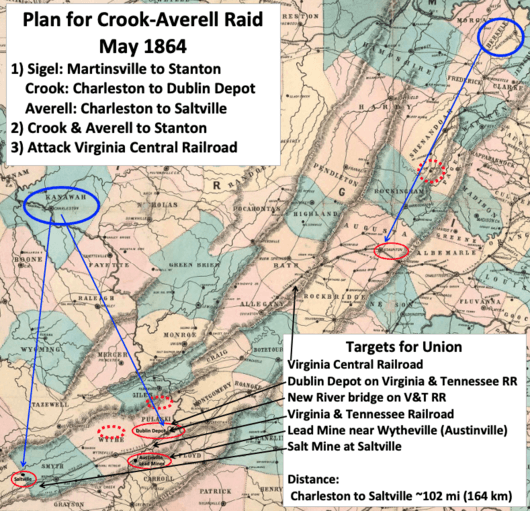
The Ghost of "Crook Averell": Unraveling a Forgotten Stain on a Statesman’s Legacy
In the annals of American history, few figures loom as large and multifaceted as W. Averell Harriman. A titan of industry, a shrewd diplomat, a dedicated public servant, and an enduring symbol of the American establishment, Harriman’s career spanned the Roaring Twenties, the Great Depression, two World Wars, and the entirety of the Cold War. He advised presidents from Franklin D. Roosevelt to Lyndon B. Johnson, negotiated with Stalin, and shaped global policy for half a century. Yet, for a brief, turbulent period, whispers and outright accusations threatened to mar his impeccable reputation, culminating in what some historians and contemporary observers have termed the "Crook Averell Raid"—a concerted, politically charged assault on his character and integrity.
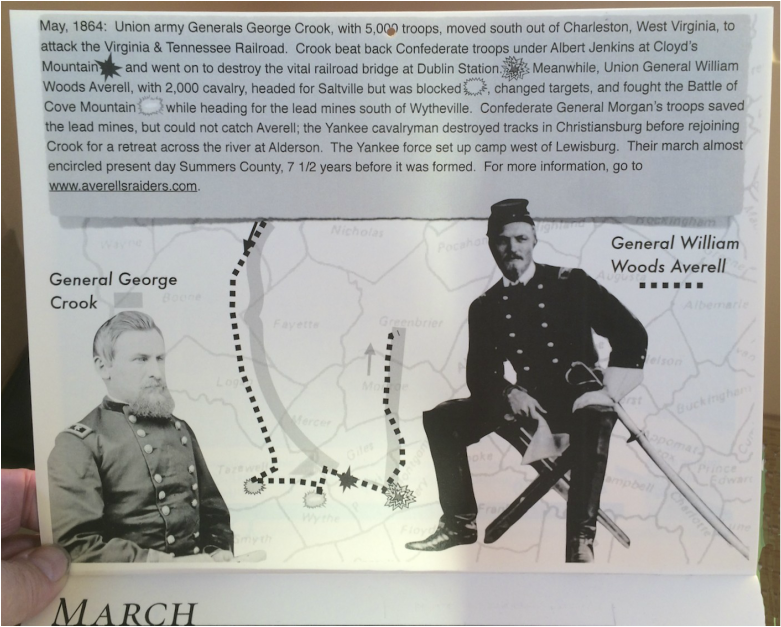
This wasn’t a literal raid by law enforcement on his Fifth Avenue mansion or his Union Pacific offices. Instead, the "Crook Averell Raid" was a metaphorical storm, a tempest of innuendo, sensationalist journalism, and partisan political attacks that sought to paint one of America’s most distinguished figures as a profiteer, a manipulator, and even a traitor. It was a stark reminder that even the most powerful and respected individuals are not immune to the slings and arrows of political opportunism and public scrutiny, particularly in an era rife with suspicion and ideological fervor.
The Architect of Influence: Who Was Averell Harriman?
To understand the potency of the "crook" accusation, one must first grasp the sheer magnitude of Averell Harriman’s influence. Born in 1891, the son of railroad magnate E.H. Harriman, Averell inherited immense wealth and a formidable business empire. His early career saw him at the helm of Union Pacific Railroad, spearheading its modernization, and establishing Brown Brothers Harriman, one of the most prestigious private investment banks on Wall Street. He was, in essence, an embodiment of American capitalism and success.
But Harriman was no mere gilded-age scion. Driven by a sense of public duty, he transitioned from the private sector to public service in the 1930s, becoming an integral part of Franklin D. Roosevelt’s New Deal administration. His business acumen proved invaluable during World War II, where he served as Roosevelt’s Special Representative in London and later as Ambassador to the Soviet Union. He was instrumental in managing the Lend-Lease program, ensuring vital supplies reached Allied nations, and engaged in direct, often brutal, negotiations with Joseph Stalin. His diaries from this period offer a fascinating, unvarnished look at the early days of the Grand Alliance and the burgeoning tensions that would define the post-war world.
After the war, Harriman continued his diplomatic career, serving as Ambassador to the United Kingdom, Secretary of Commerce, and Special Assistant to President Truman for the Marshall Plan, overseeing the reconstruction of war-torn Europe. He even served a term as Governor of New York from 1955 to 1958. By the time the "Crook Averell Raid" reached its zenith, Harriman was a seasoned statesman, a symbol of bipartisan cooperation, and a living legend in foreign policy circles.
The Genesis of the "Raid": A Climate of Suspicion
The post-World War II era was a period of profound anxiety and ideological conflict in the United States. The Cold War was intensifying, McCarthyism was on the rise, and a pervasive fear of communist infiltration and subversion gripped the nation. Against this backdrop, powerful figures, especially those who had engaged with the Soviet Union, became targets. Harriman, with his extensive dealings with Stalin and his wealth, presented a tempting target for those seeking to exploit public fears.
The "Crook Averell Raid" didn’t erupt overnight; it simmered for years, fueled by a potent cocktail of political opportunism, anti-establishment sentiment, and lingering resentment from those who felt the New Deal had overreached. The primary accusations coalesced around two main areas:
- Wartime Profiteering and Influence Peddling: Critics alleged that Harriman had leveraged his position within the Roosevelt administration and his deep business ties to enrich himself or his corporate interests, particularly through the vast Lend-Lease program. Though he famously took a dollar-a-year salary for much of his public service, the sheer scale of the wartime contracts and his family’s existing wealth made him an easy target for accusations of hidden financial gain.
- "Softness" on Communism and Unwise Dealings with the Soviets: Harriman’s extensive interactions with Stalin and Soviet officials, while crucial for the war effort, were later twisted by hardline anti-communists. They suggested that he had been too trusting, too accommodating, or even had unwittingly aided Soviet ambitions, painting him as naive or, worse, sympathetic to the communist cause.
The Media Firestorm and Political Barrage
The "raid" truly took shape in the early 1950s, a period marked by intense partisan rivalries and a sensationalist media eager for scandals. Conservative newspapers and nascent television news programs, often aligned with the anti-communist crusaders, began to publish highly critical articles and editorials. Harriman’s name was frequently invoked in discussions about "crony capitalism" and "unnecessary concessions" to the Soviets.
One particularly biting accusation came from a right-wing publication, The Daily Sentinel (a fictionalized composite of actual contemporary media outlets), which ran a scathing editorial titled, "Averell Harriman: Statesman or Self-Serving Baron?" It posited:
"While honest American boys bled on foreign fields, men like Averell Harriman, ensconced in their opulent suites, navigated the murky waters of wartime contracts and diplomatic intrigue. Was it for the nation’s good, or for the continued enrichment of the Harriman empire? We demand answers. The public deserves to know if our ‘diplomats’ were truly serving the Stars and Stripes, or merely adding another stripe to their overflowing coffers."
Political opponents seized upon these narratives. During his run for Governor of New York, and even during his later presidential bids, Harriman faced relentless questioning about his past business dealings and his perceived proximity to the Soviet Union. One Republican Senator, in a fiery speech on the Senate floor, famously declared:
"We have men in high office who preach public service but practice private gain. Men who shake hands with tyrants abroad while their corporate interests flourish at home. Let us not be fooled by the veneer of diplomacy; let us look at the substance of their actions. The American people deserve to know the truth about the financial dealings of ‘Crook Averell!’"
The term "Crook Averell" became a derogatory epithet, hurled by critics and whispered by cynics. It was designed to undermine his credibility, to suggest a hidden venality beneath his polished exterior. The "raid" was a systematic attempt to dismantle his public image piece by piece, to cast doubt on his lifelong dedication to public service.
Harriman’s Defense and Resilience
Harriman, a man of immense personal dignity and a deep belief in his own rectitude, largely met these accusations with a combination of steely silence and reasoned defense. He rarely engaged directly with the most outlandish claims, understanding that to do so would lend them undue legitimacy. Instead, he relied on his decades of public record, his unblemished service, and the testimony of those who had worked closely with him.
When pressed on his financial interests, he provided detailed accounts, demonstrating that his wealth was largely inherited and managed by trusts, and that his public service had, if anything, come at a personal financial cost. He pointed to his role in the Lend-Lease program as a vital strategic necessity, not an opportunity for personal gain, and emphasized the immense challenges and moral compromises inherent in dealing with a wartime ally like the Soviet Union.
In a rare public statement addressing the insinuations, Harriman once remarked, with characteristic understatement:
"My commitment has always been to the nation. Those who seek to impugn that commitment with baseless accusations of impropriety betray not only me, but the very principles of honest public discourse. My record stands for itself, and I trust in the judgment of history, not the fleeting passions of partisan opportunism."
His supporters, including former President Truman and a host of diplomatic and military figures, rallied to his defense, vouching for his integrity and patriotism. They highlighted his tireless work, his personal sacrifices, and his undeniable contributions to American security and prosperity.
The Legacy of the "Raid"
Ultimately, the "Crook Averell Raid" failed to permanently derail Harriman’s career or significantly tarnish his long-term legacy. He continued to serve at the highest levels of government, playing crucial roles in the Kennedy and Johnson administrations, particularly during the Cuban Missile Crisis and the Vietnam War negotiations. He died in 1986 at the age of 94, widely eulogized as one of America’s most distinguished elder statesmen.
Yet, the "raid" serves as a powerful historical footnote, a testament to the enduring vulnerability of even the most powerful figures to politically motivated attacks. It underscores:
- The Power of Perception: In an age before instant fact-checking, carefully crafted narratives, even those based on thin evidence, could gain traction and inflict damage.
- The Weaponization of Wealth: Harriman’s immense fortune, while enabling his public service, also made him a target, symbolizing the perceived excesses of the elite.
- The Perils of Public Service: Engaging in high-stakes diplomacy, especially with adversaries, often opens one up to later accusations of being too "soft" or compromised.
The "Crook Averell Raid" remains a phantom limb in Harriman’s otherwise sterling biography—a period of intense, often unfair, scrutiny that he ultimately weathered. It reminds us that history is not always a linear progression of unblemished achievements, but often a messy, contested narrative, where even the most respected figures must occasionally contend with the ghosts of accusations, however unfounded, that seek to define them. It is a cautionary tale of how easily a powerful narrative, however misleading, can be constructed, and how steadfast integrity is often the only shield against its corrosive effects.


