The Unyielding Heartbeat: Life and Resilience in California’s Death Valley
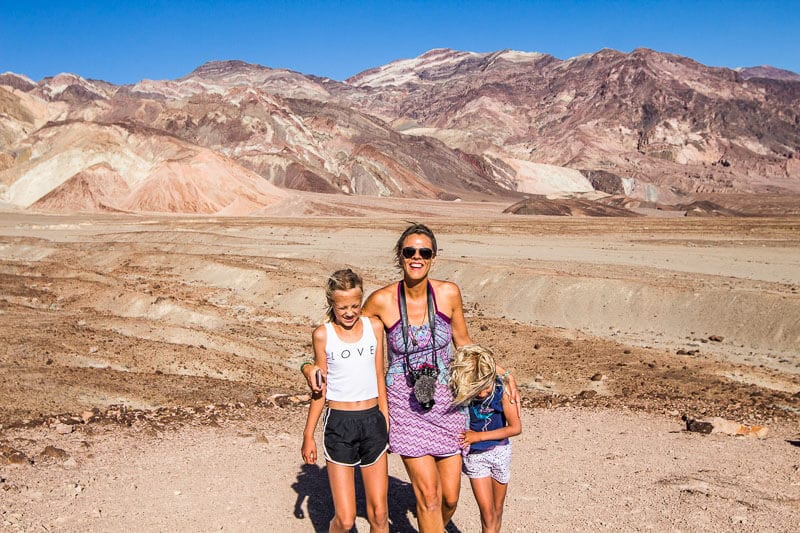
In the crucible of California’s Mojave Desert, where the sun beats down with an almost biblical intensity and the land itself seems to exhale heat, lies a place many associate with desolation: Death Valley. It holds records for the hottest air temperature ever recorded on Earth and the lowest elevation in North America. Yet, within this stark, often unforgiving landscape, life not only persists but thrives – a testament to the indomitable spirit of nature and, most profoundly, of humanity. The "people of Death Valley" are a unique, resilient breed, bound by a shared love for this extreme environment, a profound sense of community, and a quiet determination to call the world’s furnace their home.
Their story is not monolithic; it’s a tapestry woven from millennia of indigenous wisdom, the raw grit of 19th-century pioneers, and the quiet dedication of modern-day stewards, scientists, and dreamers. To understand Death Valley is to understand its people, for they are as much a part of its identity as its shimmering salt flats and towering Panamint Mountains.
The Ancient Keepers: Timbisha Shoshone

The narrative of human habitation in Death Valley begins not with conquest or discovery, but with a deep, ancestral connection. For at least a thousand years, and likely far longer, the Timbisha Shoshone people have called this region their Nümü Tümpisha, or "rock paint people" land. Far from seeing it as "dead," they understood its intricate ecosystems, its seasonal rhythms, and its hidden oases. They lived nomadically, moving between mountain refuges in summer and the valley floor in winter, skillfully harvesting mesquite beans, piñon nuts, and game, using ingenious techniques to survive and prosper where others saw only barrenness.
Their ancestral knowledge is a living library of survival. "This land provides everything we need, if you know how to ask it," says Barbara Durham, a Timbisha Shoshone elder, her voice carrying the weight of generations. "We didn’t just survive here; we lived well. It taught us respect, patience, and how to listen to the earth." The Timbisha Shoshone’s continuous presence is a powerful counter-narrative to the valley’s grim moniker, highlighting a profound adaptation rather than a desperate struggle. After decades of advocating for their rights, they achieved federal recognition in 1983 and, critically, established the first land base for a non-reservation tribe in 2000, allowing them to rebuild a community within the park at Furnace Creek, reclaiming a vital piece of their heritage.
The Gritty Pioneers: Borax and the ’49ers
The mid-19th century brought a new, more disruptive wave of people to Death Valley: the prospectors and pioneers of the American West. The infamous "Death Valley ’49ers," a group of gold seekers who strayed into the valley in 1849, gave the area its chilling name after enduring immense suffering and loss. Legend has it that as they finally escaped, one woman looked back and said, "Goodbye, Death Valley!" – a name that stuck.
Yet, even after this harrowing experience, the valley continued to beckon. It wasn’t gold that ultimately transformed its human landscape, but borax. Discovered in the 1880s, this mineral became the lifeblood of a new industry. The iconic "20 Mule Teams" that hauled borax from the Harmony Borax Works to Mojave, a grueling 165-mile journey across the desert, became a symbol of human endurance and ingenuity. These teams, consisting of 18 mules and two horses, pulled wagons weighing 36.5 tons over a period of 10 years (1883-1889), demonstrating a level of sustained effort almost unimaginable today.
The borax miners and their families built temporary towns like Furnace Creek and Ryan, carving out a harsh existence centered around industrial labor. They endured the same extreme heat and isolation as the ’49ers, but with the added layer of a structured, demanding job. Their stories are ones of raw courage, hard work, and the relentless pursuit of opportunity, no matter how remote or dangerous.
The Modern Stewards: Park Rangers, Concessionaires, and Community
Today, the permanent population of Death Valley is a testament to a different kind of magnetism. It’s not the lure of gold or borax, but the profound beauty, the scientific intrigue, and the unique lifestyle that draws people here. The majority of residents are associated with the National Park Service (NPS) or Xanterra Parks & Resorts, the primary concessionaire. They are park rangers, maintenance workers, interpretive guides, hotel staff, researchers, and a handful of independent artists and residents who simply refuse to live anywhere else.

"You don’t just work in Death Valley, you live it. It gets into your soul," says Sarah Jenkins, a veteran park ranger who has spent over a decade protecting and interpreting the valley. Her days are a blend of patrolling vast expanses, educating visitors, and responding to emergencies – often under conditions that would send most people fleeing. "The challenges are immense, from the heat to the sheer scale of the park. But the rewards? They’re immeasurable. Waking up to a sunrise over Badwater Basin, seeing a bighorn sheep in a remote canyon, or helping a visitor truly connect with this place – that’s why we stay."
Life in Death Valley is a logistical ballet. The main residential areas, like Furnace Creek and Stovepipe Wells, are tiny islands of human activity in a vast sea of desert. Supplies must be trucked in from hundreds of miles away. Medical facilities are limited, and the nearest major hospital is a two-hour drive. The summer months, when temperatures routinely soar above 120°F (49°C), present unique challenges. Air conditioning units run non-stop, cars overheat, and outdoor activities are restricted to early mornings or late evenings.
"You learn to respect the heat, not fight it," explains Mike Peterson, who manages one of the concession facilities. "Your day revolves around it. You get up early, do what needs to be done, and then you retreat indoors. But there’s a certain camaraderie that comes with enduring it together. We’re all in this furnace together."
This shared experience fosters an incredibly tight-knit community. With so few people and so much isolation, residents become like an extended family. They rely on each other for social interaction, support, and practical help. Potlucks, movie nights, and shared outdoor adventures (in cooler months) are common. When someone needs help, the entire community rallies. It’s a throwback to a simpler time, where interdependence isn’t just a virtue, but a necessity.
"We might bicker like any family, but when push comes to shove, we’re here for each other," says Elena Rodriguez, a long-time resident who works in visitor services. "There’s a fierce loyalty to this place and to the people who choose to call it home. It’s not for everyone, but for those of us who stay, it’s everything."
The Scientists and Artists: Finding Inspiration in Extremes
Beyond the day-to-day operations, Death Valley also attracts a steady stream of scientists and artists, drawn by its unparalleled geology, unique ecology, and stark aesthetic. Geologists study its fault lines, ancient lakebeds, and shifting sand dunes. Biologists examine extremophile organisms that thrive in its saline springs and parched soils. Astronomers revel in its dark night skies, free from light pollution.
Dr. Anya Sharma, a climatologist who spends several months a year conducting research in the park, finds profound inspiration in the valley’s extremes. "Death Valley is a living laboratory," she explains. "It’s a place where you can directly observe the forces of geology and climate in action. The data we collect here about heat, aridity, and adaptation has global implications for understanding climate change."
Artists, too, find a muse in the valley’s dramatic contrasts. Photographers capture the ethereal glow of sunrise on Zabriskie Point, painters render the pastel hues of the Badwater Basin salt flats, and writers seek solitude and clarity amidst its vastness. "The landscape here strips away all the noise," says sculptor David Chen, who recently completed an artist-in-residence program. "It forces you to confront the essential. There’s a raw, almost spiritual beauty that resonates deep within."
Balancing Preservation and Presence
As a National Park, Death Valley faces the constant challenge of balancing preservation with the demands of over a million visitors annually. The people who live and work here are on the front lines of this effort. They educate tourists about safety in extreme conditions, interpret the park’s natural and cultural history, and work tirelessly to protect its fragile ecosystems from human impact.
The future of Death Valley and its people is intertwined with the larger narrative of climate change. The valley is already experiencing hotter temperatures and more extreme weather events. The Timbisha Shoshone continue their efforts to preserve their cultural sites and adapt their traditional practices to a changing environment. Park staff are implementing strategies to protect water resources, monitor vulnerable species, and educate the public about environmental stewardship.
The people of Death Valley are not just inhabitants; they are guardians. They carry the torch of resilience passed down from ancient times, through the industrial age, and into an uncertain future. They embody the paradox of the valley itself: a place of profound challenge that nurtures an equally profound human spirit. In their quiet strength, their unwavering dedication, and their deep connection to this extraordinary land, the heartbeat of Death Valley continues to echo, strong and unyielding, against the backdrop of the world’s hottest, lowest, and most captivating place.


