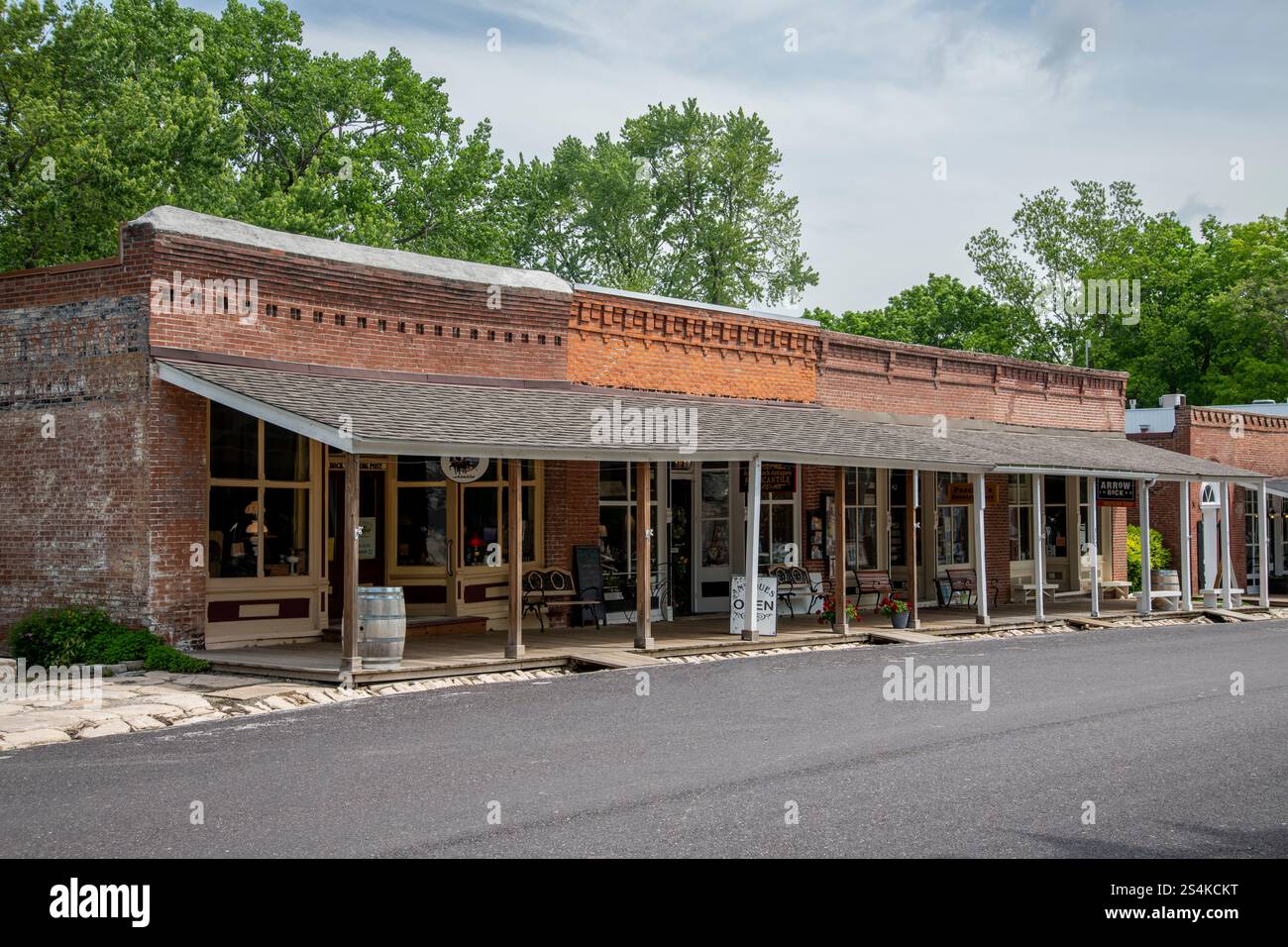
Arrow Rock, Missouri: Where Time Lingers and History Speaks
Nestled on a bluff overlooking the Missouri River, Arrow Rock, Missouri, is more than just a village; it’s a meticulously preserved whisper from America’s past. A place where the dust of the Santa Fe Trail still seems to settle on cobblestone streets, and the echoes of frontier life resonate from historic homes, Arrow Rock stands as a living testament to the nation’s westward expansion and the complex tapestry of its early days. With a permanent population hovering around 50 residents, this tiny hamlet punches far above its weight, offering visitors a profound journey back in time, challenging them to slow down and listen to the stories etched into its very foundations.
To truly understand Arrow Rock, one must first grasp its geographical significance. The village’s strategic position on the Missouri River, then a bustling highway of commerce, made it a natural waypoint for those venturing westward. Named for the flint-rich bluffs that Native American tribes once quarried for arrowheads, the area was a significant gathering place long before European settlers arrived. These bluffs, still visible today, served as a vital resource for tool-making and provided a natural landmark for river travelers.
By the early 19th century, as the United States pushed its boundaries ever westward, Arrow Rock emerged as a pivotal hub. Indeed, it served as a crucial jumping-off point for the Santa Fe Trail, one of America’s most significant commercial and migration routes. From its docks, goods were loaded onto wagons heading southwest, and weary travelers found respite before embarking on the arduous journey to Santa Fe, New Mexico. While the trail officially began in Franklin, Missouri, Arrow Rock quickly became a more practical and popular starting point due to its stable river landing and burgeoning infrastructure. Imagine the scene: bustling riverboats unloading cargo, merchants haggling, blacksmiths hammering, and the hopeful, nervous faces of pioneers preparing for a journey into the unknown.
Among the notable figures who shaped Arrow Rock’s early narrative were Dr. John Sappington and the renowned artist George Caleb Bingham. Dr. Sappington, a pioneer in American medicine, established his practice and home here in the 1820s. His groundbreaking work involved the widespread use of quinine to treat malaria, then known as "fever and ague," a prevalent and often fatal illness in the marshy river regions. His "Anti-Fever Pills," containing quinine, were widely distributed and saved countless lives, particularly in an era plagued by rampant disease and limited medical understanding. His medical practice and business acumen made him one of Missouri’s wealthiest men, and his legacy profoundly impacted public health on the frontier.
Meanwhile, George Caleb Bingham, often hailed as "Missouri’s most celebrated artist," called Arrow Rock home during significant periods of his life. His genre paintings, depicting fur traders, flatboatmen, and lively election scenes, offer a vivid, unvarnished look at frontier life, making Arrow Rock a tangible connection to his artistic vision. Bingham’s former home in Arrow Rock is now a museum, meticulously restored and furnished, offering visitors a glimpse into his life and the inspirations behind his iconic works. To walk through his rooms is to step into the very world he captured on canvas, a world of rugged independence, community spirit, and the unfolding drama of a young nation.
But Arrow Rock’s history is not solely defined by celebrated figures and westward expansion. It also bears witness to the complex and often painful realities of American history, including the Civil War and the experiences of its African American community. Missouri was a border state during the Civil War, deeply divided in its loyalties, and Arrow Rock felt the tremors of this conflict. While no major battles were fought directly within the village, it was frequently occupied by both Union and Confederate forces, and its residents navigated a treacherous landscape of divided loyalties and constant uncertainty.
Among its most poignant narratives is the story of its African American community. Before the war, enslaved people constituted a significant portion of the area’s population, their labor fueling the local economy. After the Civil War and the abolition of slavery, a vibrant community of formerly enslaved people established itself here, building homes, businesses, and their own spiritual center. Brown’s Chapel Free Will Baptist Church, built in 1869 by these freedmen, stands today as a powerful symbol of resilience, faith, and self-determination. It served not only as a place of worship but also as a vital community hub, a school, and a beacon of hope in a challenging post-war landscape. "It’s a powerful reminder of the strength and determination of those who forged new lives here," a visitor might reflect, standing within its humble, hallowed walls.
By the early 20th century, Arrow Rock, like many river towns bypassed by the burgeoning railroad network, began to fade from its commercial prominence. The decline in river traffic, coupled with the shift to rail, meant fewer opportunities and a dwindling population. However, this decline, paradoxically, became its salvation. Without the pressures of modern development and urban sprawl, many of its historic structures remained intact, simply falling into disuse rather than being torn down or modernized beyond recognition.
Recognizing the immense historical value of the village, the state of Missouri began acquiring properties in the 1920s, eventually designating much of Arrow Rock as a State Historic Site. This foresight transformed the village into a living museum, ensuring its preservation for future generations. "Arrow Rock is a remarkable example of how a community can collectively decide to honor and preserve its past," states a historian involved in its ongoing care. "It’s not just a collection of old buildings; it’s a narrative that continues to unfold, meticulously cared for and interpreted."
Today, a visit to Arrow Rock is an immersive experience. The Arrow Rock State Historic Site serves as the primary steward of the village, offering guided tours, educational programs, and maintaining many of the key historic structures. The first stop for many is the Visitor Center, where exhibits provide context and maps guide exploration. From there, the village unfolds like a meticulously curated diorama.
Perhaps the most iconic structure is the Arrow Rock State Historic Site Tavern, built in 1834. This federal-style brick building has the remarkable distinction of being one of Missouri’s oldest continuously operating restaurants and inns. Stepping inside is like stepping into a bygone era: dark wood, period furnishings, and the aroma of hearth-cooked meals fill the air. Dining at the Tavern, perhaps enjoying a classic Missouri fried chicken, is not just a meal; it’s a tangible connection to the travelers, merchants, and politicians who gathered within its walls nearly two centuries ago. "Eating here is like tasting history," a diner might remark, savoring the ambiance as much as the food.
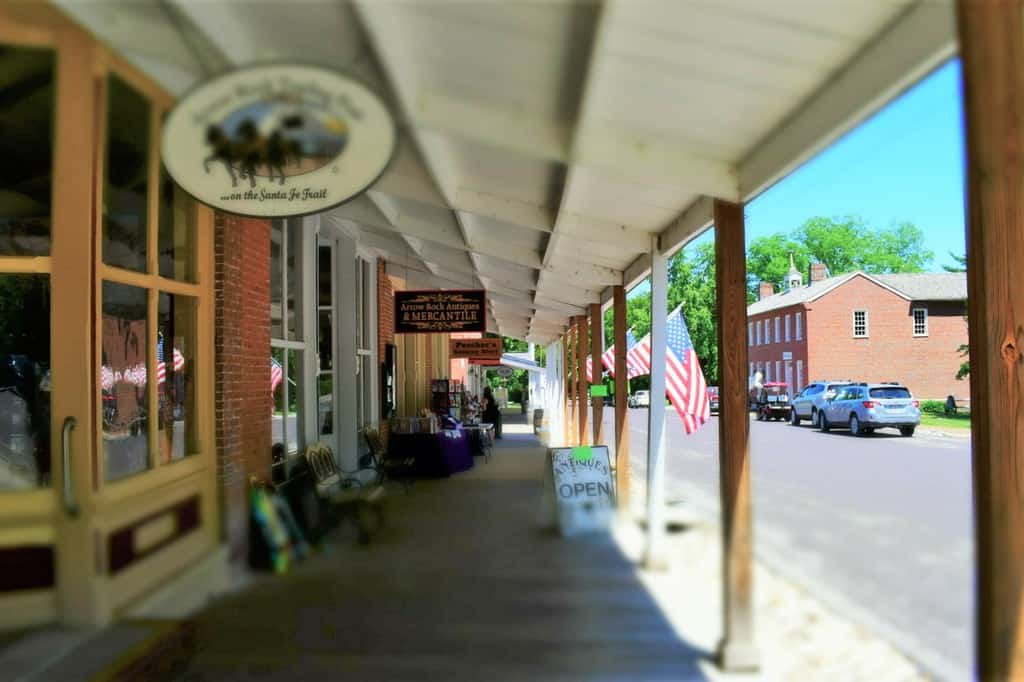
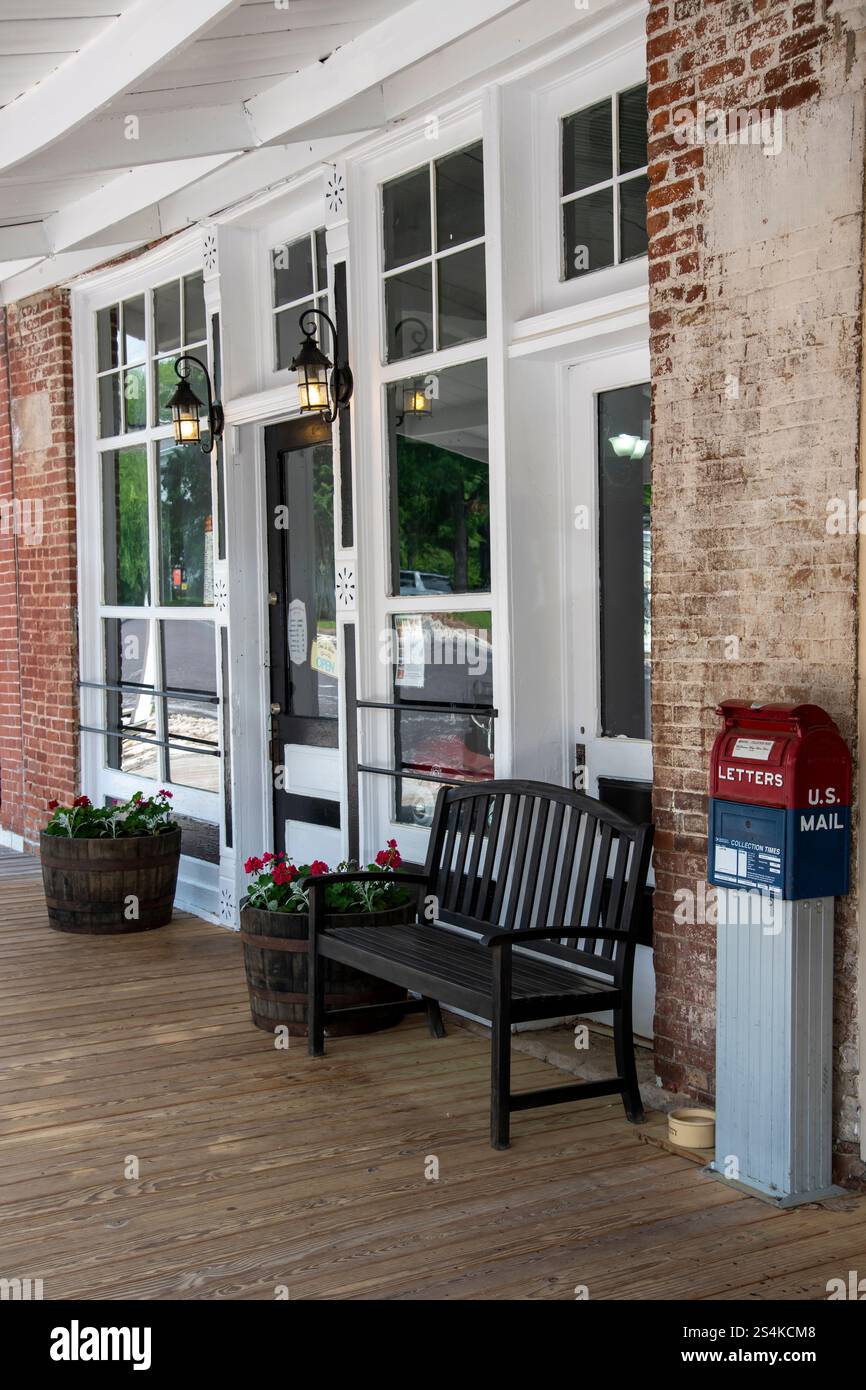
Beyond the Tavern, visitors can explore the Bingham Home, Brown’s Chapel, the J. Huston General Store (built in 1837 and also continuously operated for many years), the courthouse, and various other period homes and shops. Each building tells a part of the larger story, offering insights into architecture, daily life, commerce, and community. Craftsmen sometimes demonstrate traditional skills, and reenactors occasionally bring the past to life with vivid portrayals of historic figures.
Adding to Arrow Rock’s unique charm is the Arrow Rock Lyceum Theatre. Founded in 1961, it is one of Missouri’s oldest professional regional theaters. Housed in a beautifully restored historic building, the Lyceum produces a full season of musicals and plays each summer, drawing audiences from across the state and beyond. The juxtaposition of professional, contemporary theater within such a deeply historic setting creates a delightful cultural synergy, proving that history and vibrant artistic expression can coexist and thrive.
What truly sets Arrow Rock apart, however, is its pervasive sense of tranquility. There are no traffic lights, no chain stores, and the quiet hum of modern life seems to recede at the village limits. Walking its unpaved streets, past picket fences and well-tended gardens, one can almost hear the rumble of a wagon, the distant call of a riverboat, or the murmur of conversations from a bygone age. It’s a place that invites contemplation, a rare opportunity to disconnect from the frantic pace of the present and immerse oneself in the enduring spirit of the past.
Arrow Rock, Missouri, is more than just a picturesque village; it’s a living archive, a place where the echoes of pioneers, artists, and resilient communities converge. It challenges visitors to slow down, listen closely, and engage with the stories etched into its very foundations. In a world rushing forward, Arrow Rock stands as a gentle, yet profound, reminder that sometimes, the greatest treasures are found in the pages of the past, waiting patiently to be rediscovered and cherished.


