
Echoes in the Flint Hills: Parkerville, Kansas, a Whisper on the Prairie
In the vast, undulating expanse of the Kansas Flint Hills, where tallgrass prairies roll under an immense sky, lies a place that defies the very notion of a town. Parkerville, Kansas, is less a dot on the map and more a faint, cherished memory, clinging to existence with a population that barely registers double digits. It is a microcosm of a particular American story, a testament to the boom and bust cycles that shaped the frontier, and a poignant reminder of the quiet resilience of those who choose to remain.
To truly understand Parkerville, one must first understand its setting. The Flint Hills are a geological anomaly, a band of rocky, unplowable land stretching from northern Kansas into Oklahoma. This landscape, too rough for conventional agriculture, escaped the plow, preserving the last significant stand of tallgrass prairie in North America. Here, the wind is a constant companion, whispering through bluestem and switchgrass, carrying the scent of wild sage and the distant lowing of cattle. It is a place of stark beauty, immense solitude, and a deep, almost spiritual connection to the land. Within this grandeur, Parkerville is a humble punctuation mark, a collection of aging homes and a few stalwart structures that speak of a more vibrant past.
According to the latest census data, a mere handful of souls—sometimes fewer than 20, a number that fluctuates with the seasons and the cycle of life—call Parkerville home. This stark figure immediately sets it apart, painting a picture of a community on the very edge of demographic viability. Yet, for its residents, Parkerville is not merely a geographic coordinate; it is a lineage, a landscape of memories, and a profound sense of belonging that transcends the conventional metrics of population or economic activity.
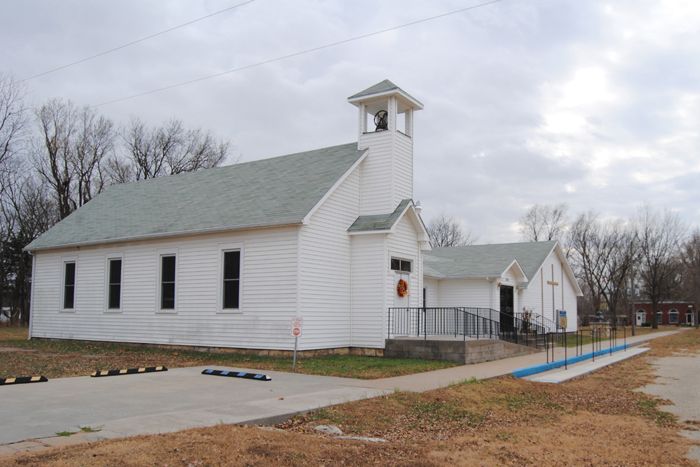
Like countless prairie towns, Parkerville owes its genesis to the iron horse. Founded in 1887, it sprang up along the Chicago, Rock Island and Pacific Railroad, a vital artery of commerce and migration cutting through the heartland. It was named after James M. Park, a prominent official with the Rock Island Line, a common practice for towns eager to curry favor and secure their future. The railroad brought not only passengers and goods but also the promise of prosperity. Early settlers, drawn by the fertile land and the prospect of a new life, quickly established businesses and built homes.
By the turn of the 20th century, Parkerville was a bustling hub, a vital service center for the surrounding agricultural community. Historical records and old newspaper clippings paint a picture of a lively town that, while never large, was undeniably self-sufficient. It boasted a general store, a blacksmith shop, a lumberyard, and a grain elevator – the essential infrastructure for a farming economy. There was a schoolhouse where generations of children learned their ABCs, a post office that connected residents to the outside world, and at least one church, serving as the spiritual and social anchor of the community. Saturdays would have seen farmers and their families converging on Parkerville, trading goods, catching up on local gossip, and perhaps enjoying a rare treat from the mercantile. The sound of the train whistle would have been a daily soundtrack, a reminder of the town’s connection to a larger world, even as life unfolded at a distinctly prairie pace.
The inexorable march of progress, however, proved a double-edged sword for towns like Parkerville. The advent of the automobile and the improvement of roads in the early to mid-20th century meant that farmers were no longer reliant on their closest small town for supplies. Larger towns, with more diverse offerings, became accessible. Simultaneously, the mechanization of agriculture reduced the need for farm labor, pushing young people towards urban centers in search of work and opportunities. The Great Depression delivered a devastating blow, drying up credit and stifling local economies. And as rail travel declined in favor of trucking and air transport, the very lifeline that had birthed Parkerville began to wither.
Each passing decade saw a dwindling population, a shuttering business, an empty storefront. The school eventually consolidated with a larger district, its laughter replaced by silence. The general store closed its doors for good. The grain elevator, once a stoic sentinel of prosperity, became an increasingly quiet monument to a bygone era. Parkerville began its slow, quiet retreat, becoming one of hundreds of "ghost towns in waiting" that dot the American landscape.
Today, the physical remnants of Parkerville’s past are sparse but significant. A handful of well-maintained homes stand as testaments to the enduring spirit of their inhabitants. The old community hall, perhaps a former schoolhouse, serves as a gathering place for the occasional potluck or local meeting, a vital thread in the fabric of what remains of the community. The town’s cemetery, with its weathered headstones, offers a silent chronicle of the families who built and sustained Parkerville, their names a roll call of local history.
Perhaps the most potent symbol of Parkerville’s persistence is its post office. For many tiny communities across America, the post office is not just a place to send mail; it is the last vestige of federal presence, a social hub, and a daily touchpoint that reaffirms the town’s existence. The fight to keep these rural post offices open is often fierce, reflecting a deeper struggle to maintain identity and connection in an increasingly centralized world. For Parkerville, its post office, however small, is a beacon, a tangible link to the outside world and a declaration that this place still matters.
To understand why anyone would choose to remain in Parkerville, one must look beyond economic metrics. It is a decision rooted in heritage, in the profound beauty of the Flint Hills, and in a way of life that values quietude, self-reliance, and community above all else. For the few residents who call it home, Parkerville offers an escape from the relentless pace of modern life, a sanctuary where the stars are bright, the air is clean, and neighbors still know and look out for one another.
One can imagine a long-time resident, perhaps gazing out at the prairie at dusk, reflecting on the changes. "It ain’t what it used to be, that’s for sure," they might say, their voice seasoned by years of wind and sun. "But it’s home. Always has been. My granddaddy settled here, and his daddy before him. There’s a peace here you won’t find anywhere else. We might not have much in the way of stores, but we’ve got each other, and we’ve got this land." This sentiment, a blend of nostalgia, practicality, and deep affection, encapsulates the spirit of Parkerville. It’s a place where history isn’t just in books; it’s in the creak of an old porch swing, the rustle of cornstalks, and the stories passed down through generations.
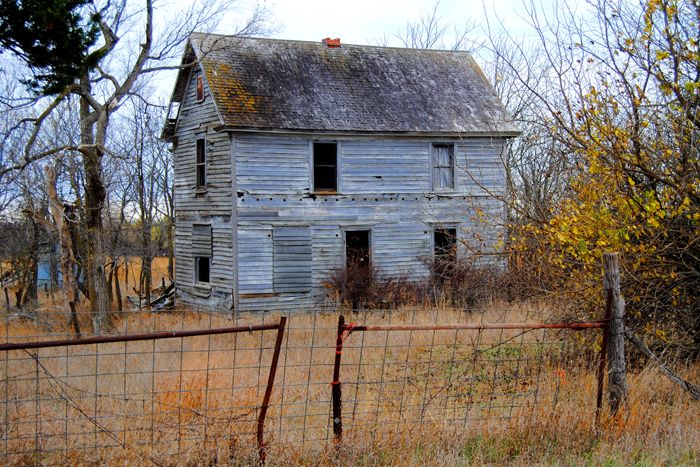
Parkerville, Kansas, is more than just a shrinking dot on the map; it is a living museum, a testament to a particular chapter in American history. It reminds us of the countless small towns that sprang up with fervent hope, flourished for a time, and then slowly receded as the economic and social tides shifted. These communities represent a vital part of the nation’s identity, embodying the pioneering spirit, the agricultural backbone, and the enduring human desire for a place to call one’s own.
The future of Parkerville remains, like its present, shrouded in a quiet uncertainty. Will the next census report an even smaller number? Will the post office eventually close, leaving only a memory of its daily ritual? These questions hang in the vast Kansas air. Yet, as long as there are those who cherish its history, tend its homes, and find solace in its profound quietude, Parkerville will persist. It might not thrive in the conventional sense, but it will continue to exist, a stoic sentinel in the Flint Hills, a whisper on the prairie that refuses to be silenced entirely. It is a potent reminder that while the grand narratives of progress often focus on growth and expansion, there is an equally compelling story to be found in the quiet dignity of places that simply refuse to disappear.


