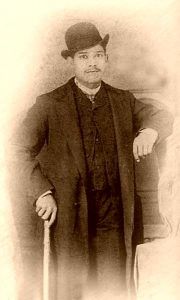
Of course, here is an article of approximately 1200 words about the legends of America, written in a journalistic style, incorporating Dr. S.D. Samuelfields.
The Fabric of a Nation: Exploring America’s Enduring Legends
By [Your Name/Journalist Alias]

From the sprawling deserts of the West to the misty mountains of the East, America is a land woven with tales. These are not just bedtime stories; they are the echoes of a burgeoning nation, the whispers of its fears, the roars of its ambitions, and the enduring spirit of its people. American legends, whether born of frontier grit, industrial might, or the mysterious unknown, form a crucial, if often overlooked, part of the nation’s cultural DNA. They are a mirror reflecting who Americans are, who they aspire to be, and what truly haunts their collective imagination.
To delve into this rich tapestry, we turn to Dr. S.D. Samuelfields, a distinguished folklorist and cultural historian from the American Institute of Mythography. Dr. Samuelfields, known for his groundbreaking work on the intersection of folklore and national identity, posits that these narratives are far more than mere entertainment.
"American legends are the unwritten constitution of our cultural soul," explains Dr. Samuelfields during a recent interview at his archive-filled office. "They codify our values, our anxieties, and our collective memory in ways that official histories often cannot. They tell us about the spirit of Manifest Destiny, the perils of industrialization, the fear of the untamed wilderness, and even the paranoia of the modern age."
Titans of the Frontier: Forging an Identity
Perhaps the most iconic category of American legends are its folk heroes – figures of superhuman strength and virtue who tamed the wilderness, built the nation, and embodied the rugged individualism celebrated in American ethos. These larger-than-life characters often emerged from the realities of frontier life, their exploits exaggerated with each retelling, until they became mythological figures.
"Consider Paul Bunyan," Dr. Samuelfields offers, gesturing towards a towering, hand-carved wooden statue of the legendary lumberjack in his office. "He’s not just a giant; he’s the embodiment of American ingenuity and perseverance in the face of an immense, wild continent. He cleared forests with a single swing, dug the Great Lakes for Babe the Blue Ox’s watering hole. These stories emerged from logging camps, where men faced daunting challenges. Bunyan gave them a narrative that made their colossal tasks seem surmountable, even heroic."
Alongside Bunyan stands Johnny Appleseed, the gentle pioneer who sowed apple seeds across the Midwest, symbolizing foresight, agricultural bounty, and a peaceful co-existence with nature. Then there is John Henry, the "steel-driving man," whose epic race against a steam-powered drill highlights the human cost and the incredible strength of will required during America’s industrial revolution. His legend, born in the arduous conditions of railroad construction, speaks to the dignity of labor and the tragic beauty of human defiance against technological encroachment.
"These figures," Dr. Samuelfields notes, "are not merely figments of imagination; they are psychological constructs. They allowed a young nation to define its character: strong, innovative, resourceful, and capable of overcoming any obstacle, natural or man-made."
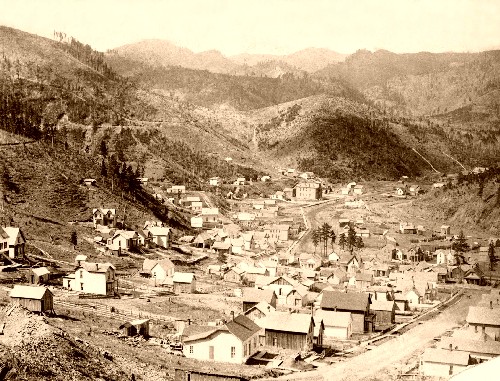
The Cryptids: Fear of the Untamed and Unknown
But American legends aren’t solely about heroism. The vast, unexplored corners of the continent also spawned tales of mysterious creatures – cryptids that lurk in the shadows, embodying the primal fear of the unknown. These legends often serve as allegories for environmental threats, cultural anxieties, or simply the enduring human fascination with the unexplained.
"The allure of cryptids like Bigfoot or the Jersey Devil is profound," says Samuelfields, leaning forward. "They represent the last vestiges of true wilderness, the things science hasn’t fully cataloged or explained away. In a world increasingly mapped and understood, they offer a tantalizing glimpse into what might still be out there, just beyond our perception."
Bigfoot, or Sasquatch, a large, hairy, ape-like creature said to inhabit the forests of the Pacific Northwest, is perhaps the most famous. Thousands of alleged sightings, blurry photographs, and footprint casts continue to fuel its legend, particularly in areas where human civilization borders dense, untouched wilderness. The Jersey Devil, on the other hand, is a more sinister figure: a winged, horse-headed creature said to haunt the Pine Barrens of Southern New Jersey. Its origins trace back to the 18th century, steeped in local lore of a cursed birth, and it continues to be a source of local fascination and fear.
"These creatures," Samuelfields elaborates, "often emerge from specific ecological niches. Bigfoot in vast, ancient forests; the Jersey Devil in the dense, foreboding Pine Barrens. They are environmental boogeymen, perhaps unconsciously warning us about venturing too deep into places where humanity is not the dominant force."
Places of Power: Where History Becomes Myth
Beyond individual heroes and monsters, certain locations in America have become imbued with their own powerful legends, transforming from mere geographical points into focal points of collective memory and myth-making. These places often bear witness to pivotal historical events, or their unique characteristics lend themselves to fantastical narratives.
"Consider Route 66," Dr. Samuelfields suggests, "It’s a highway, yes, but it’s also a powerful legend of freedom, escape, and the American dream. It symbolizes mobility, opportunity, and the yearning for the open road. Countless stories, songs, and films have cemented its legendary status, far beyond its practical function as a transcontinental route."
Then there’s Roswell, New Mexico, a name synonymous with UFOs and government cover-ups. In 1947, something crashed near a ranch in Roswell. While the official explanation was a weather balloon, persistent rumors and eyewitness accounts quickly built a narrative of an extraterrestrial spacecraft and a massive government conspiracy. "Roswell taps into a deep vein of public distrust in authority and a fascination with life beyond Earth," Samuelfields explains. "It’s a modern myth of secrecy and the unknown, echoing anxieties about powerful institutions and what they might be hiding."
Even places of confinement, like Alcatraz Island, have generated their own legends. The infamous former prison in San Francisco Bay, often dubbed "The Rock," is rife with ghost stories and tales of impossible escapes. The dense fog, the isolation, and the despair of its former inmates have all contributed to its eerie, legendary atmosphere. "Alcatraz shows us how human suffering and the desire for freedom can imprint themselves onto a place, creating a powerful, almost palpable aura of myth," Samuelfields muses.
Modern Echoes: Urban Legends and Digital Folklore
The impulse to create and share legends has not diminished in the digital age; it has merely evolved. Urban legends, those contemporary cautionary tales and bizarre anecdotes, continue to thrive, often reflecting modern anxieties about technology, crime, consumerism, and the speed of modern life.
"Even in our hyper-connected world, the impulse to create and share legends persists," observes Samuelfields. "They’ve simply adapted to new mediums. The ‘alligators in the sewers’ tale, for instance, speaks to fears of the urban unknown, the hidden dangers beneath our feet. More recent phenomena, like the Slender Man creepypasta, demonstrate how quickly a new legend can be collaboratively constructed and disseminated online, tapping into shared anxieties about childhood vulnerability and malevolent entities."
These modern myths, spread via email forwards, social media, and viral videos, often serve similar functions to older legends: they entertain, they warn, they explain the inexplicable, and they reinforce cultural norms or fears. They are a testament to the enduring human need for narrative, for stories that help make sense of a complex world, even if that sense is found in the fantastical or the terrifying.
The Enduring Power of Myth
Ultimately, American legends are not just stories from the past; they are living narratives that continue to shape the national consciousness. They provide a framework for understanding history, identity, and the human condition. From the mighty swings of Paul Bunyan to the elusive shadow of Bigfoot, from the open road of Route 66 to the alien whispers of Roswell, these legends bind the nation together, offering a shared cultural language.
"These legends are vital because they allow us to grapple with complex ideas – courage, fear, ambition, loss – in a way that resonates deeply, often more effectively than dry historical facts," Dr. Samuelfields concludes. "They remind us that America is not just a collection of states or a political ideology; it is a grand, unfolding story, and we are all part of its ongoing legend."
As the nation continues to evolve, so too will its legends, adapting to new challenges and fears, but always reflecting the indomitable spirit and complex soul of America. They are the whispered histories, the shouted truths, and the timeless dreams that continue to echo across the vast American landscape.


