The Echoes of Montserrat: A Tiny Missouri Hamlet’s Grand Name and Fading Past
In the heartland of America, where the expansive skies meet the rolling plains of central Missouri, lies a place whose very name conjures images of ancient Spanish mountains and monastic serenity. Montserrat. It’s a moniker that feels profoundly out of place amidst the cornfields and quiet county roads, a whispered secret hinting at a history far richer and more complex than its unassuming present suggests. This tiny, unincorporated community, little more than a scattering of homes and memories today, stands as a poignant testament to the ebb and flow of American frontier life, the rise and fall of industrial ambition, and the enduring power of a name to evoke a forgotten grandeur.
To stumble upon Montserrat, Missouri, on a map or by chance, is to encounter an immediate paradox. The real Montserrat, in Catalonia, Spain, is a majestic, saw-toothed mountain range crowned by a Benedictine monastery, a site of profound spiritual and cultural significance. Its American namesake, however, offers no such dramatic topography. Instead, it presents a landscape of gentle slopes, fertile soil, and the unmistakable tranquility of rural Missouri. The dissonance between the exotic, resonant name and the humble reality begs an immediate question: how did such a place acquire such a name?
Local historians and regional lore offer a few theories, each adding a layer of romanticism to Montserrat’s origins. The most widely accepted posits that the community, established in the mid-19th century, was named by Spanish immigrants or perhaps by railroad workers with a connection to the Iberian Peninsula. The Missouri Pacific Railroad, a vital artery of commerce and migration, laid tracks through this area, and new settlements often sprang up along its route, named by those who built or settled them. It’s plausible that someone, perhaps a foreman or a settler with a nostalgic heart, christened this nascent community after the iconic Spanish landmark, envisioning a future as grand and enduring as its European namesake.
Montserrat’s true boom, however, was not built on spiritual pilgrimage but on black gold: coal. In the late 19th and early 20th centuries, central Missouri was a significant coal-producing region, and Montserrat quickly became a bustling mining town. The rich veins of bituminous coal beneath its surface drew prospectors, investors, and a diverse workforce, transforming the quiet agricultural outpost into a vibrant industrial hub. Mines like the Montserrat Coal & Coke Company employed hundreds, and the town’s population swelled, supporting a range of businesses from general stores and saloons to churches and schools.
"Montserrat wasn’t just a dot on the map back then," explains local historian Eleanor Vance, whose family roots in Johnson County stretch back generations. "It was a throbbing heart of industry. Miners, many of them immigrants from Europe – Italians, Welsh, Irish – came here seeking opportunity, building lives in the shadow of the mine shafts. There was a raw, vibrant energy to the place, a sense of shared purpose, even amidst the hard, dangerous work of extracting coal."
Life in a coal town was arduous. Miners faced long hours, perilous conditions, and the constant threat of accidents. Yet, a strong sense of community often flourished in these environments. Families lived close, sharing both their hardships and their triumphs. The railroad, which had given Montserrat its initial impetus, now served as its lifeline, carrying the extracted coal to markets across the state and beyond, fueling the industrial expansion of the Midwest. For a time, the grand name Montserrat felt less incongruous, as the town hummed with the ambition and toil of a community carving out its place in the American dream.
But the fortunes of coal towns are often as volatile as the market for their product. By the mid-20th century, the coal seams around Montserrat began to play out, and cheaper, more accessible sources of energy emerged. The demand for local coal waned, and the mines, one by one, shuttered their operations. As the jobs disappeared, so too did the people. Families moved on, seeking work in larger cities or in other industries. The bustling streets grew quiet, the businesses closed, and the schools consolidated with those in neighboring towns. Montserrat began its slow, inexorable retreat from a vibrant industrial center to the quiet, agricultural community it had once been, and indeed, to what it is today.
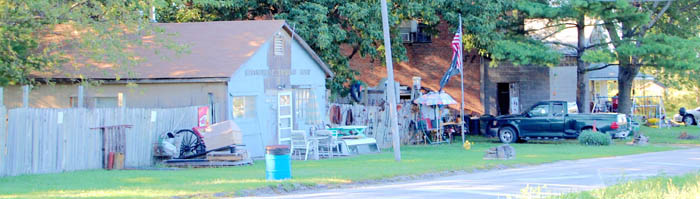
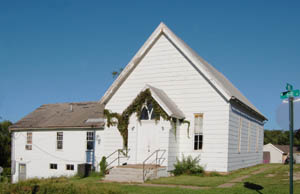
Today, Montserrat is an unincorporated community, meaning it lacks a municipal government and is overseen by Johnson County. Its population is not officially tallied, but it is certainly in the low double digits, if not fewer. There’s no downtown, no bustling main street. What remains are a handful of homes, perhaps an old church or a community hall that serves as a focal point for local gatherings, and, most tellingly, a cemetery. These silent fields of stone are the most eloquent chroniclers of Montserrat’s past, bearing the names of the pioneer families, the coal miners, and the generations who lived and died under its grand, Spanish-tinged name.
Yet, Montserrat’s story doesn’t end with its decline. Just a few miles to its north lies a modern behemoth, a powerful counterpoint to Montserrat’s fading echoes: Whiteman Air Force Base. Home to the legendary B-2 Spirit stealth bomber, Whiteman is a bastion of cutting-edge military technology, a hub of global power projection. The roar of its mighty aircraft can often be heard reverberating across the same fields where coal miners once toiled and farmers now tend their crops.
This proximity creates a fascinating juxtaposition. On one hand, you have Montserrat, a quiet sentinel of the past, representing the industrial might of a bygone era. On the other, Whiteman AFB, a symbol of contemporary technological prowess and military might. The base provides employment and economic stability to the wider region, drawing new residents and infusing the area with a transient, dynamic population of service members and their families. While Montserrat itself remains largely untouched by this modern influx, its very existence is framed by the presence of this global military powerhouse, a constant reminder of how dramatically the landscape of human endeavor can shift over time.
"It’s like living between two different centuries," observes a hypothetical long-time resident, whose family might have witnessed both the peak of the coal industry and the arrival of the B-2. "You can almost hear the train whistles from the old days, then a few minutes later, the distinct, low rumble of a B-2 taking off. It reminds you that things change, but the land, and some of the history, stays right here."

Montserrat, Missouri, serves as a microcosm of countless small towns across America that experienced similar cycles of boom and bust. It embodies the relentless march of progress, the impact of resource depletion, and the quiet resilience of those who choose to stay, tending to the land and the memories of what once was. It’s a place where the American narrative of expansion, industry, and eventual transformation is writ small, but no less profoundly.
For those who value history and the unvarnished stories of the past, Montserrat offers a quiet pilgrimage. It’s a place to reflect on the lives of those who dug its coal, farmed its fields, and built its community. It’s a reminder that even the most humble places can possess a deep, resonant history, and that a name, no matter how grand or incongruous, can be a powerful vessel for memory.
In a world increasingly dominated by the sprawling metropolises and digital connections, Montserrat, Missouri, stands as a quiet, dignified anomaly. It’s a testament to the fact that not every place needs to be a bustling center of commerce or a major tourist destination to hold significance. Sometimes, the most compelling stories are found in the forgotten corners, in the echoes of a grand name whispered across the fields, telling tales of ambition, hard work, and the enduring spirit of a small community in the heart of America. The saw-toothed mountains of Spain may be thousands of miles away, but in this quiet corner of Missouri, the name Montserrat continues to resonate, a silent ode to a past that, though faded, is far from forgotten.


